

Some startups make a lot of noise and then vanish. Others work quietly for years and then change an entire industry. If you want to spot the second kind early, you need to know where to look.
Below are 20 startups to watch in 2026, across artificial intelligence, robotics, clean energy, healthcare, defense, and the Indian tech scene.
For each company, you will see what it actually does and what to keep an eye on next.
Quick Look: 20 Startups to Watch in 2026
| # | Startup | Country | Focus |
| 1 | Mistral AI | France | AI models |
| 2 | Perplexity | USA | AI search |
| 3 | Anysphere (Cursor) | USA | AI coding tools |
| 4 | Harvey | USA | Legal AI |
| 5 | Abridge | USA | Healthcare AI |
| 6 | Skild AI | USA | Robot foundation models |
| 7 | Figure AI | USA | Humanoid robots |
| 8 | Agility Robotics | USA | Warehouse robots |
| 9 | Apptronik | USA | Humanoid robots |
| 10 | 1X | Norway / USA | Home robots |
| 11 | Isomorphic Labs | UK | AI drug discovery |
| 12 | Commonwealth Fusion Systems | USA | Fusion energy |
| 13 | Helion | USA | Fusion energy |
| 14 | Fervo Energy | USA | Geothermal power |
| 15 | Shield AI | USA | AI for aircraft and drones |
| 16 | Helsing | Germany | Defense software |
| 17 | Anduril | USA | Autonomous defense |
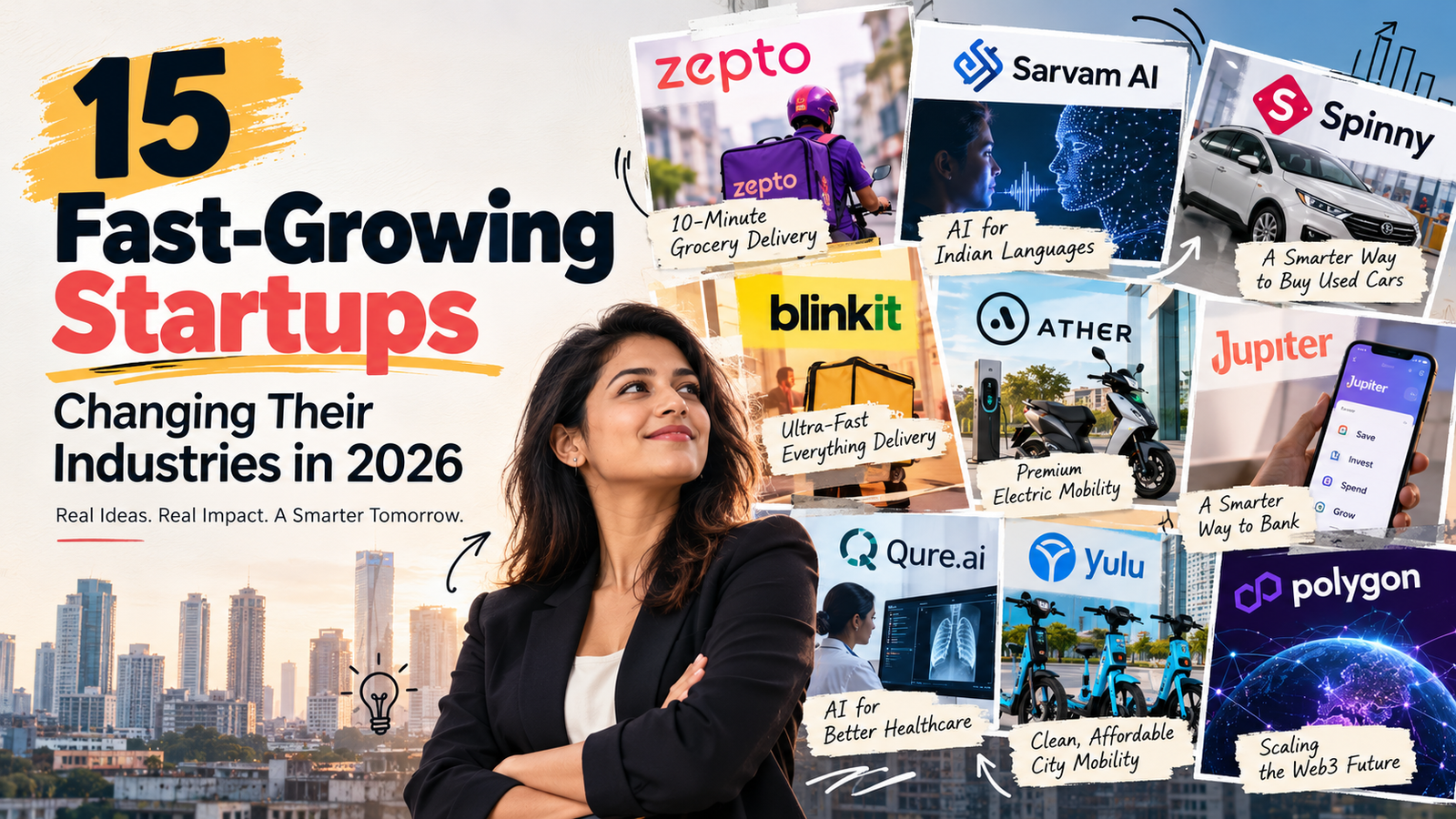
| 18 | Sarvam AI | India | Indian language AI |
| 19 | Emergent Labs | India | AI app building |
| 20 | Neysa | India | AI infrastructure |
Why 2026 Is a Big Year for the Startup Ecosystem
Before we get to the names, here’s some context on the money.
A few numbers tell us why so many innovative startups are getting attention this year.
AI is taking the biggest share of funding. The World Economic Forum’s 2026 Technology Pioneers report says AI now accounts for more than 60% of all global venture capital. Even startups working on energy, or medicine, are using AI to accelerate with small teams.
Robots are finally leaving the lab. Global robotics funding hit $13.8 billion in 2025, up from $7.8 billion in 2024, according to a robotics industry tracker. In the first quarter of 2026 alone, robotics startups raised over $2.26 billion, most of it for warehouse and factory automation.
India is busy, just in a different way. Inc42 reports that Indian startups raised $5.2 billion in the first half of 2026. That is down 9% from last year, but the number of deals rose to 501, up 7%. In simple terms, there is less money in the total, but more companies are being funded.
Put these together and you see a clear message: investors are backing fewer “me too” apps and more companies that build real technology, from smarter software to machines that do physical work.
The 20 Startups to Watch in 2026
AI and Software Startups
AI software is where most of the money and talent is flowing. These five companies are changing how people search, code, practice law, and take care of patients.
1. Mistral AI (France)
Mistral AI was founded in Paris in 2023 by researchers who previously worked at Google DeepMind and Meta. The company makes large language models, the same tech behind popular AI chatbots, plus its own assistant, Le Chat. It has quickly become Europe’s best-known AI lab.
Why watch it: Many governments and businesses in Europe want AI that is not tied to US companies. Mistral gives them an option. It also releases some models openly, which developers like, as they can customize them. Keep an eye on its enterprise deals and any new model launches.
2. Perplexity (USA)
Perplexity is an AI answer engine. Instead of giving you a page of links, it reads the web and gives you a direct answer with the sources underneath. The company was cofounded in 2022 by Aravind Srinivas, who grew up in Chennai, India.
Why watch it: Search is a huge business, and Perplexity is one of the few startups that is truly challenging the old way of doing it. It has also moved into AI browsing tools. The big question is whether it can continue to grow while giants like Google add similar features.
3. Anysphere, the Maker of Cursor (USA)
Anysphere is the company behind Cursor, an AI-powered code editor. Developers can ask it to write functions, fix bugs, or explain old code right in the same window they code. It was started by a small group of MIT graduates and has grown very fast among software teams.
Why watch it: Writing code is one of the first jobs where AI has clearly saved time. Cursor shows how a focused product can attract loyal users even when big tech companies offer rivals. Watch how it handles competition and whether companies adopt it across their engineering teams.
4. Harvey (USA)
Harvey builds AI tools for lawyers. Law firms use it to review contracts, research cases, draft documents, and answer client questions quickly. It was founded in 2022 by a lawyer and an AI researcher, and several large international law firms have used it.
Why watch it: Legal work requires reading huge amounts of text, which is where language models shine. If Harvey earns lawyers’ trust, it could become standard software in the legal industry. The key thing to track is accuracy, because in law, one wrong detail can be costly.
5. Abridge (USA)
Abridge makes AI that listens to conversations between doctors and patients and writes the clinical notes automatically. The company was founded by a practicing cardiologist, Dr. Shiv Rao in 2018, and its tool is used by major health systems in the United States.
Why watch it: Doctors spend a shocking amount of time on paperwork, and this is a leading cause of burnout. A tool that gives them that time back has an obvious value. Watch how it rolls out to more hospitals and whether it can expand beyond note-taking into billing and patient follow-ups.
Robotics and Physical AI Startups
Physical AI means artificial intelligence that can see, move, and work in the real world. Industry trackers call 2026 the year this field moved from demos to factory floors. These five companies lead the story.
6. Skild AI (USA)
Skild AI is based in Pittsburgh and is trying to build a general “brain” for robots. Instead of programming each machine for one task, the idea is to train one AI model that can run many different robots. Crunchbase reported that it raised $1.4 billion in January 2026, tripling its valuation to $14 billion in just seven months.
Why watch it: If one model can control many robot types, the cost of building useful robots could fall sharply. It is a big bet, and big bets can fail. Watch for real customer deployments, not just impressive videos.
7. Figure AI (USA)
Figure AI builds humanoid robots, which are robots in the shape of people, to work in spaces made for humans. The company has tested its robots in manufacturing, including work with the car industry, and has raised billions of dollars from investors.
Why watch it: Humanoid robots are expensive and hard to build, but they could do dull, dirty or dangerous jobs. Figure is one of the best-funded names in this space. The thing to watch is how many robots actually end up working paid shifts.
8. Agility Robotics (USA)
Agility Robotics makes Digit, a walking robot to move boxes and totes in warehouses. Unlike many humanoid startups, it has focused on one clear job: moving things from one place to another.
Why watch it: A narrow focus is often a smart strategy. If Digit can do a boring job reliably, warehouse owners may buy more of them. Watch for bigger customer orders and safety approvals for robots working near people.
9. Apptronik (USA)
Apptronik is an Austin-based company that builds a humanoid robot called Apollo. It aims at practical work in logistics and manufacturing and has worked with big industrial and technology partners.
Why watch it: The company grew out of university robotics research, and has the engineering depth to build real hardware. In robotics, hardware is the hard part. Keep an eye on production numbers and new partnerships.
10. 1X (Norway and USA)
1X wants to bring humanoid robots into people’s homes. Its robot, called NEO, is designed to help with chores like tidying up. Most robot startups focus on factories, so 1X stands out by aiming at everyday families.
Why watch it: A home robot has to be safe, affordable and genuinely useful, which is a very high bar. If 1X gets it right, it could open a market far bigger than factories. Watch for real delivery to customers and how people react when they live with a robot.
Healthcare and Clean Energy Startups
AI needs enormous amounts of electricity, and the world also needs better medicines. These four startups are working on both.
11. Isomorphic Labs (UK)
Isomorphic Labs was created from Google DeepMind’s work on protein science, the research behind AlphaFold. It uses AI to design and test possible new medicines in the computer before anyone enters a laboratory. It has announced partnerships with large drug makers.
Why watch it: Developing a new drug usually takes about ten years and costs billions. If AI can speed up even part of that, the benefits are huge. But drug trials take time, so watch for the first AI-designed candidates entering human testing.
12. Commonwealth Fusion Systems (USA)
Commonwealth Fusion Systems, which came out of MIT, is working on nuclear fusion. Fusion is the process that powers the sun. It can make large amounts of clean electricity without long-lived radioactive waste. The company uses powerful magnets to hold the super-hot fuel in place.
Why watch it: Fusion has been “30 years away” for decades, so be careful with promises. Still, the company is building real test machines and signing up energy partners. Watch for the results from its test reactor, because that is the proof that matters.
13. Helion (USA)
Helion is another fusion company, but with a different design. It has a long-term agreement to supply power to Microsoft and is building its first power plant in the state of Washington.
Why watch it: Having a big tech buyer lined up gives it real pressure to deliver. Watch whether it meets its promised timelines, because fusion deadlines have a history of slipping.
14. Fervo Energy (USA)
Fervo Energy builds geothermal power plants, which are powered by hot underground heat. It borrows drilling methods from the oil and gas industry to reach hot rock far more cheaply than older geothermal projects could.
Why watch it: Unlike solar and wind, geothermal power can run day and night. That makes it attractive to data centres that never switch off. Watch how quickly the company can build new plants and whether costs continue to drop.
Defence and Security Startups
Defence technology is now one of the most active areas for venture investment, as governments buy more software-driven systems. These companies are at the centre of the trend.
15. Shield AI (USA)
Shield AI builds AI “pilots” that let aircraft and drones fly and make decisions without a human controller or GPS. Its Hivemind software and its V-BAT drone are the main products.
Why watch it: Modern conflicts often involve jamming that cuts off communication. Systems that can think for themselves in those conditions are in demand. Watch for new government contracts and international sales.
16. Helsing (Germany)
Helsing is a Munich-based defence technology company. It builds AI software that helps militaries understand what is happening on the battlefield, and makes drones.
Why watch it: European countries are raising defence budgets, and they want homegrown suppliers. Helsing is one of the leading European startups in this area. Watch how it balances growth with ethical debates around military AI.
17. Anduril (USA)
Anduril was started by Palmer Luckey, who also started Oculus. The company builds autonomous defence systems such as surveillance towers, drones and underwater vehicles, all connected through its AI platform called Lattice.
Why watch it: Anduril wants to build defence products the same way that tech companies do: fast and in large numbers. Its factory plans and government contracts are the things to watch.
Startups From India
India has one of the world’s largest startup ecosystems, and AI is the main story. These three companies show where Indian deep tech is heading. If you want a closer look at the country’s AI scene, we have a full guide to Indian AI startups to watch in 2026.
18. Sarvam AI (India)
Sarvam AI, based in Bengaluru, builds AI models that are designed for Indian languages. According to Inc42, it raised $234 million from HCLTech and became the country’s second AI unicorn, meaning a company valued at over $1 billion. Industry reports describe its Sarvam-105B model as a leading option for Indian languages.
Why watch it: India has over 20 official languages, and most global AI tools work best in English. A company that solves this problem well can reach hundreds of millions of people. Watch for government projects and customer adoption outside of big cities.
19. Emergent Labs (India)
Emergent Labs is a Bengaluru-based AI company. A report on Indian AI funding in the first half of 2026 named Emergent and Sarvam as two names to watch because of the large rounds they secured. The company works on letting people build software by describing what they want in plain language.
Why watch it: If someone with no coding skills can build a working app, millions more people can build businesses. Watch how many paying users it gets, and how it competes with global equivalents in the same space.
20. Neysa (India)
Neysa is an AI infrastructure company. It provides the computing power that other businesses need to train and run AI models. Think of it as the engine room behind many AI products. It is part of India’s growing push to have its own AI computing capacity.
Why watch it: Every AI company needs chips and cloud power, and this is expensive. If India wants to build AI at home, companies like Neysa are essential. Watch for new data centre capacity and large customer contracts.
Big Trends Behind These Startups
Reading across all 20 companies, a few patterns emerge. Knowing them gives you context for any new startup you might see.
- AI is becoming a layer, not a product. Many of these startups use AI to improve an old industry like law, medicine or construction.
- Physical AI is the next big thing. Software is crowded. Robots that do real work are harder to build, but also harder to copy.
- Energy is now a tech story. AI data centres use a lot of power, so fusion, geothermal and others are getting investment.
- Defence tech is going mainstream. Governments now buy software-first systems, which opens the door for startups.
- Local AI matters. From Mistral in Europe to Sarvam in India, countries want AI that understands their languages and rules.
How to Judge a Startup Before You Invest, Join or Partner
A cool demo is not the same as a good business. Use these five checks on any emerging startup:
1. Real problem: Does it solve something people already pay to fix?
2. Real customers: Are there paying users or signed contracts, not just waiting lists?
3. Healthy funding: Does the company have enough cash to survive for 18 to 24 months?
4. Honest communication: Do the founders talk about risks and delays openly?
The Risks You Should Know About
It would not be fair to talk only about the good side. Most startups fail, and even well-funded ones can struggle. Valuations can dip quickly. Robotics and fusion companies in particular depend on technical breakthroughs that may take longer than planned. If you are thinking about investing, never put in money you cannot afford to lose, and speak to a licensed financial advisor. This article is for information only, and is not financial advice.
Frequently Asked Questions
What are the best startups to watch in 2026?
It depends on your interest. For AI, look at Mistral AI, Perplexity and Anysphere. For robotics, Skild AI and Figure AI stand out. For clean energy, look at Commonwealth Fusion Systems and Fervo Energy.
What makes a startup promising?
A promising startup solves a real problem, has paying customers, a capable team and enough funding to keep going. Fast growth helps, but steady and honest growth is a sign of quality.
Which industries have the most emerging startups in 2026?
AI is the largest by funding. Robotics, clean energy, healthcare and defence technology are close. AI also shows up inside almost every other industry.
How can I find new startups before they become famous?
Follow funding news on sites like Crunchbase and Inc42, read the lists from accelerators and the World Economic Forum, and follow what well-known investors are backing.
Are these startups safe to invest in?
No startup is risk-free. Many fail, and some on this list may struggle. Treat this list as a starting point for research, not as investment advice.
Is the startup ecosystem in India growing?
Yes, though the pattern is mixed. Funding in the first half of 2026 was slightly lower than a year ago, but the number of deals grew. AI startups in particular are raising more money than before.
What is the difference between a startup and a unicorn?
A startup is a young company that is trying to grow fast. A unicorn is a private startup valued at $1 billion or more. Sarvam AI, for example, became a unicorn in 2026.
Final Thoughts
The startups on this list are working on some of the hardest problems around: building robots that can work, making clean energy at scale, medicine faster and computers that understand every language. Not all of them will succeed. But together, they show where the next decade of technology is heading.